

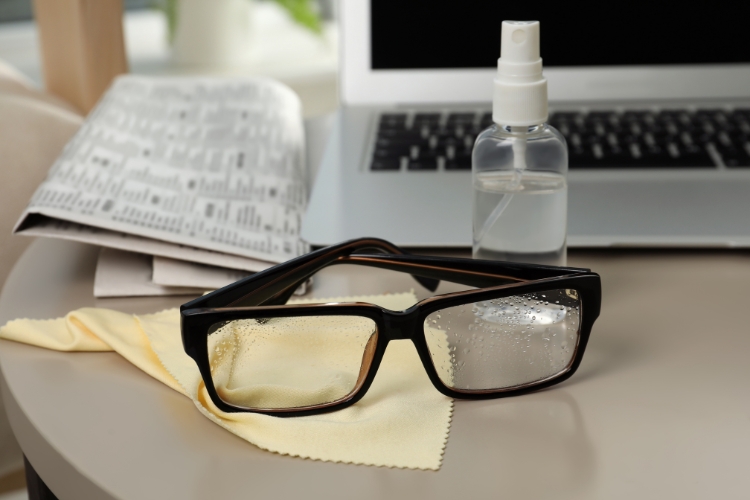
Your glasses and contact lenses play an important role in your daily life, helping you see clearly at work, school, home, and everywhere in between. Taking a few extra steps to care for them can help protect your vision, improve comfort, and keep your eyewear in good condition for longer. At Crystal Vision Clinic, we care about the long-term eye health of our patients and community, which is why we’ve gathered some simple tips to help you care for your glasses and contact lenses with confidence.
Taking Care of Your Glasses
One of the most important ways to extend the life of your glasses is to clean them properly. Many people unknowingly damage their lenses during routine cleaning. Before wiping your lenses, rinse them with lukewarm water to remove dust and debris that could cause scratches. Use a lens cleaner specifically designed for eyeglasses and dry the lenses with a clean microfiber cloth. Avoid using paper towels, tissues, napkins, or clothing, as these materials can scratch the lens surface. Household cleaners containing alcohol, ammonia, bleach, or vinegar should also be avoided, as they can damage lens coatings. Replace your microfiber cloths whenever you see them with visible oils and dust. You can clean these with warm water and dish soap or place them in the washing machine with a mild detergent. Avoid fabric softener, bleach, and drying on high heat, as this can damage the fabric.
Proper storage is just as important as proper cleaning. When your glasses are not being worn, keep them in a protective case whenever possible. If you need to set them down, place them with the lenses facing upward to help prevent scratches. Avoid leaving glasses on countertops, beds, chairs, or other surfaces where they could be accidentally knocked off or crushed.
Even with excellent care, glasses will eventually need to be replaced. Regular eye exams help ensure your prescription remains accurate and your eyes stay healthy. Consider scheduling an eye exam if your vision becomes blurry or strained, your prescription is more than one to two years old, or your lenses are heavily scratched or have coatings that are peeling or deteriorating.
Protect Anti-Reflective Coatings
Anti-reflective (AR) coatings help reduce glare and improve visual clarity, particularly when driving at night or using digital devices. To keep your lenses in good condition, clean them gently with an approved lens cleaner and a microfiber cloth. Avoid exposing your glasses to excessive heat, as high temperatures can cause the coating to crack or craze. With that being said, do not place your eyeglasses in the sunglass holder in your car no matter what. When not in use, store your glasses in a protective case, and replace worn microfiber cloths regularly to help prevent scratches.

Best Practices for Contact Lens Care
Good hand hygiene is essential for reducing the risk of eye infections. Before handling your contact lenses, wash your hands thoroughly with soap and water and dry them completely with a clean, lint-free towel. Avoid using lotions, creams, or oily products before inserting or removing your lenses, as these substances can transfer to the lens surface and cause irritation.
Unless you wear daily disposable contact lenses, your lenses must be cleaned and disinfected regularly. Use only the contact lens solution recommended by your eye care provider, and never use tap water to rinse or store your lenses. Always discard old solution from your lens case and refill it with fresh solution rather than “topping off” what remains. For the best cleaning results, rub and rinse your lenses as directed, even if you use a solution labeled as “no-rub.”
Contact Lens Safety Tips
Replace your contact lenses according to the schedule prescribed by your eye care provider. Wearing lenses longer than recommended increases the risk of discomfort, protein deposits, infection, and reduced oxygen reaching the eye. Daily lenses should be discarded after one use, biweekly lenses should be replaced every two weeks, and monthly lenses should be replaced every month.
It is also important to replace your contact lens case regularly, as it can harbor bacteria over time. Empty and air-dry the case after each use, rinse it with contact lens solution rather than water, and replace it every three months or sooner if it becomes damaged.
Avoid sleeping in your contact lenses unless your eye care provider has specifically approved them for overnight wear. Sleeping in contacts significantly increases the risk of eye infections and corneal complications. If you accidentally fall asleep while wearing your lenses, remove them as soon as possible and monitor for redness, pain, or irritation.

Travel Tips for Glasses and Contact Lens Wearers
With school being out and the kickoff to summer, there will be more fun trips. Travel can be tough on eyewear, but a little preparation helps prevent problems. Lost or damaged eyewear can disrupt travel plans. Before leaving, ensure your prescription is current and know how to contact your eye care provider if questions arise during your trip.
Store your glasses in a hard protective case and keep them in your carry-on bag rather than checked luggage to help prevent damage or scratches during travel. If possible, bring a backup pair. It is also a good idea to pack a microfiber cleaning cloth and a travel-sized lens cleaner for easy maintenance while away.
Pack extra contact lenses and an adequate supply of contact lens solution for your trip. Be sure to follow airline liquid restrictions when carrying contact lens solution. Bring a spare contact lens case and a backup pair of glasses in case your lenses become uncomfortable or are lost. To help maintain eye health and comfort, avoid sleeping in your contact lenses during long flights.
Schedule Regular Eye Exams
Proper eyewear care is important, but routine eye exams remain the best way to protect your vision. Regular examinations help ensure your prescription is accurate, your lenses are meeting your needs, and potential eye health concerns are identified early.
If it has been over a year since your last eye exam, consider scheduling an appointment. Your eyes and your vision will thank you.